



May 30, 2014
Asian America, social media and baby boomers
[caption id="attachment_5582" align="aligncenter" width="520"]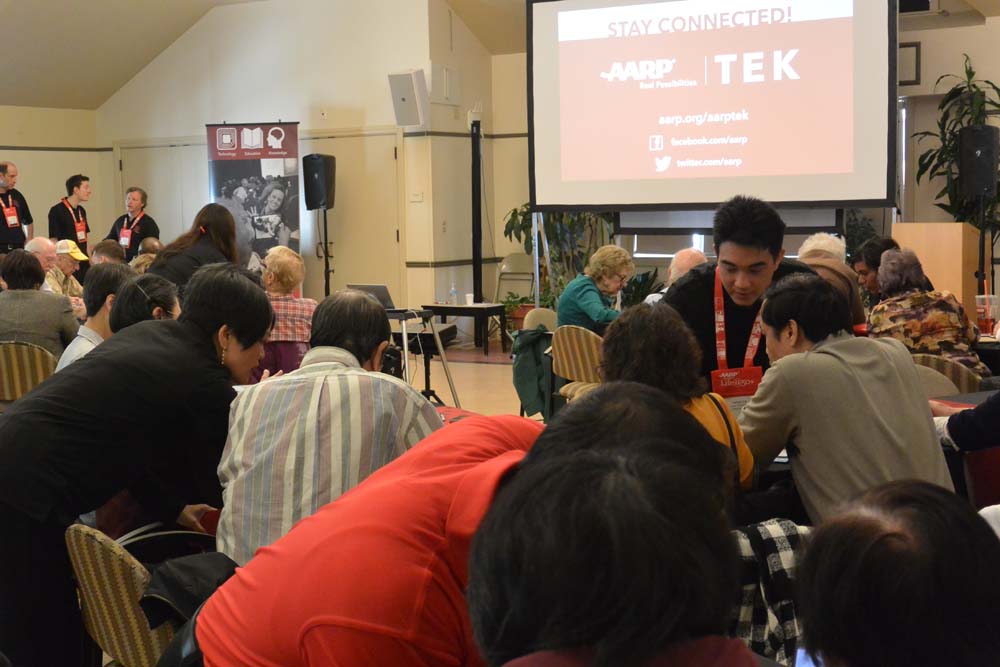 AARP's TEK team helped elderly Chinese at a senior center in Boston learn to use smartphones, and they were sending texts ad shooting selfies at the end of the session. [/caption]
[caption id="attachment_5588" align="alignleft" width="214"]
AARP's TEK team helped elderly Chinese at a senior center in Boston learn to use smartphones, and they were sending texts ad shooting selfies at the end of the session. [/caption]
[caption id="attachment_5588" align="alignleft" width="214"]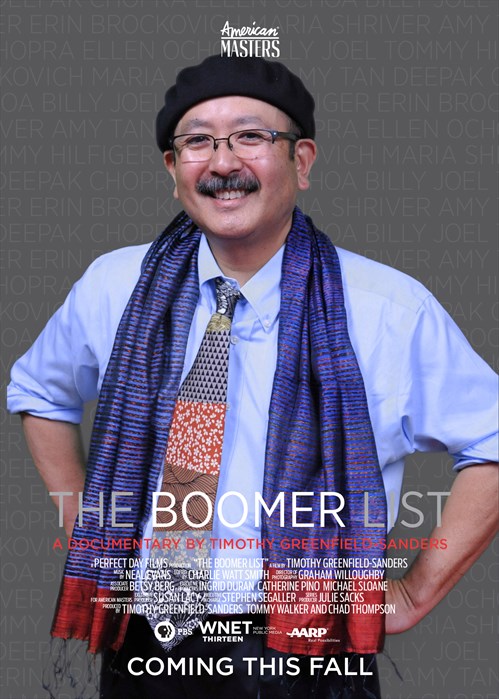 This was a fun photo booth at the AARP Member Convention in Boston, which promoted an upcoming PBS series about baby boomers sponsored by AARP. Nope, I'm not actually in the series...[/caption]As a journalist, I’ve been really lucky.
I started my career as a music critic and then a reporter, so I’ve always been able to write about pop culture – especially the pop culture of my generation, the baby boomers. Then when the Internet came along, I was able to move over to work almost exclusively in digital media, and these days I work in and speak about social media. And since I started writing my “Nikkei View” column and blog, I’ve been part of a growing chorus of Asian American voices (like the JACL's Pacific Citizen, which is about to re-launch its website after a two-year hiatus!) covering issues and stories that mainstream media frankly tends to ignore.
So I couldn’t believe my great fortune last month when I was named the 2014 Asian American Journalists Association’s AARP Social Media Fellow.
AARP, if you aren’t familiar with the organization, is the American Association of Retired People, whose members are 50 years old and older. That means that this year, the youngest baby boomers are turning 50 and can join AARP (the baby boom went from 1946 to 1964).
This was a fun photo booth at the AARP Member Convention in Boston, which promoted an upcoming PBS series about baby boomers sponsored by AARP. Nope, I'm not actually in the series...[/caption]As a journalist, I’ve been really lucky.
I started my career as a music critic and then a reporter, so I’ve always been able to write about pop culture – especially the pop culture of my generation, the baby boomers. Then when the Internet came along, I was able to move over to work almost exclusively in digital media, and these days I work in and speak about social media. And since I started writing my “Nikkei View” column and blog, I’ve been part of a growing chorus of Asian American voices (like the JACL's Pacific Citizen, which is about to re-launch its website after a two-year hiatus!) covering issues and stories that mainstream media frankly tends to ignore.
So I couldn’t believe my great fortune last month when I was named the 2014 Asian American Journalists Association’s AARP Social Media Fellow.
AARP, if you aren’t familiar with the organization, is the American Association of Retired People, whose members are 50 years old and older. That means that this year, the youngest baby boomers are turning 50 and can join AARP (the baby boom went from 1946 to 1964).
 Surfing
  Although I covered pop music at a time when punk, hardcore, "alternative" rock, rap and hip hop were the coolest sounds, I always had a soft spot for the sweet sugar of pure pop. I once wrote an essay comparing Michael Jackson to Prince, as if Jackson were the Beatles and Prince were the Rolling Stones. In my essay, MJ won out (but this was before MJ got weird).
I was, it's true, a Beatles fan over the Stones. And a lot of the reason was the vocals, not just the pop brilliance of the Lennon-McCartney and Harrison songs. I loved the Beatles' harmony. When I listen to Beatles songs, I can hear their voices dancing and meshing with each other; sometimes trading melody for harmony, sometimes taking an aural upfront position, sometimes laying back.
That's the same quality that turned me on to artists such as Simon & Garfunkel in spite of Paul Simon's brainy-nerdy lyrics (I was a brainy nerdy kid, after all, so I identified with him). Simon and Art Garfunkel's voices were a natural fit, and I still love to hear their duet vocals, especially on their earlier, unadorned music. Their solo recordings, even when they're great records, don't thrill me as much as the ones they made together.
Although I covered pop music at a time when punk, hardcore, "alternative" rock, rap and hip hop were the coolest sounds, I always had a soft spot for the sweet sugar of pure pop. I once wrote an essay comparing Michael Jackson to Prince, as if Jackson were the Beatles and Prince were the Rolling Stones. In my essay, MJ won out (but this was before MJ got weird).
I was, it's true, a Beatles fan over the Stones. And a lot of the reason was the vocals, not just the pop brilliance of the Lennon-McCartney and Harrison songs. I loved the Beatles' harmony. When I listen to Beatles songs, I can hear their voices dancing and meshing with each other; sometimes trading melody for harmony, sometimes taking an aural upfront position, sometimes laying back.
That's the same quality that turned me on to artists such as Simon & Garfunkel in spite of Paul Simon's brainy-nerdy lyrics (I was a brainy nerdy kid, after all, so I identified with him). Simon and Art Garfunkel's voices were a natural fit, and I still love to hear their duet vocals, especially on their earlier, unadorned music. Their solo recordings, even when they're great records, don't thrill me as much as the ones they made together.
 Betty James just passed away. Who's that, you say?
She's the woman whose husband invented the Slinky, and the woman who headed the company that manufactured all the wacky variations of Slinky, from Slinky Dogs to Plastic Rainbow Slinkys, for decades. My friend
Betty James just passed away. Who's that, you say?
She's the woman whose husband invented the Slinky, and the woman who headed the company that manufactured all the wacky variations of Slinky, from Slinky Dogs to Plastic Rainbow Slinkys, for decades. My friend  Barack Obama's victory last night in the U.S. presidential election brought tears to my eyes not only because of the incredible historic nature of his mere candidacy, and the poignancy of his life story, and the righteousness of overcoming the odds and connecting with the majority of Americans to win the White House. The emotions welled up because of his ability to engage me throughout the campaign -- even though I was early on a supporter of Hillary Clinton -- at a personal level.
It wasn't just the emails and text messages and the idealistic ubiquitousness of his campaign's eager, enthusiastic volunteers and supporters. The enthusiasm certainly was catching, however. It was simply the man, and his seeming thoughtfulness and determination. And his determined disregard for the most historic part of his grand run: his color.
He didn't really disregard it. He simply refused to make it the focus of his identity. The only time he addressed it head-on was with his speech during the primaries about the
Barack Obama's victory last night in the U.S. presidential election brought tears to my eyes not only because of the incredible historic nature of his mere candidacy, and the poignancy of his life story, and the righteousness of overcoming the odds and connecting with the majority of Americans to win the White House. The emotions welled up because of his ability to engage me throughout the campaign -- even though I was early on a supporter of Hillary Clinton -- at a personal level.
It wasn't just the emails and text messages and the idealistic ubiquitousness of his campaign's eager, enthusiastic volunteers and supporters. The enthusiasm certainly was catching, however. It was simply the man, and his seeming thoughtfulness and determination. And his determined disregard for the most historic part of his grand run: his color.
He didn't really disregard it. He simply refused to make it the focus of his identity. The only time he addressed it head-on was with his speech during the primaries about the  NOTE: July 8, 2022 I received an email from a reader named Sven about the fate of the Flip video camera that I wrote about way back in 2008. It of course has been discontinued long ago, as mobile phones became the de facto camera that almost everyone has with them these days. Here's a well-researched article about the