



October 23, 2009
Astro Boy is still flying high after 57 years of fighting crime with technology
 Astro Boy," the new American computer-animated version of the Japanese comic and cartoon that launched the revolution we now call anime, opens today.
I'm more than a little nervous about seeing the movie, since it may not resemble the Japanese cartoon I grew up with, and because Hollywood really screwed up "Speed Racer" when they decided to turn that classic anime into a big live-action spectacle.
(The following text is a re-worked version of a pre-blog Nikkei View column I wrote back in 2003.)
Astro Boy, called "Tetsuwan Atomu" in Japan, was originally introduced in 1952, as a manga, or comic book character, and later turned into an animated television series. Created by the pioneering Japanese comic and anime (animation) artist Osamu Tezuka, his name stands for "The Mighty Atom," an image still vivid in the minds of millions of Japanese who had lived through the end of World War II just seven years before, and the atomic bombings of Hiroshima and Nagasaki.
The cartoon character is best-known in the US for the English-dubbed versions of the "Astro Boy" series that first aired in 1963 and then was re-launched with a new series in 1982 and resurrected in a computer-animated film opening today, featuring the voices of Freddie Highmore, Nicolas Cage, Kristen Bell, Bill Nighy and Samuel L. Jackson.
The story line is a spin on Pinocchio and superhero comics, mixed with a dose of Steven Spielberg's film "A.I." (actually "A.I." borrows more than a dose from Astro Boy). When the kindhearted Dr. Boynton's (Professor Tenna in the Japanese original) son is killed in a car accident, he invents an atomic-powered robotic replacement only to discover that there's no way that the android can truly be human. The mechanical boy was born on April 7, 2003 -- the far future -- in the original manga.
Astro Boy," the new American computer-animated version of the Japanese comic and cartoon that launched the revolution we now call anime, opens today.
I'm more than a little nervous about seeing the movie, since it may not resemble the Japanese cartoon I grew up with, and because Hollywood really screwed up "Speed Racer" when they decided to turn that classic anime into a big live-action spectacle.
(The following text is a re-worked version of a pre-blog Nikkei View column I wrote back in 2003.)
Astro Boy, called "Tetsuwan Atomu" in Japan, was originally introduced in 1952, as a manga, or comic book character, and later turned into an animated television series. Created by the pioneering Japanese comic and anime (animation) artist Osamu Tezuka, his name stands for "The Mighty Atom," an image still vivid in the minds of millions of Japanese who had lived through the end of World War II just seven years before, and the atomic bombings of Hiroshima and Nagasaki.
The cartoon character is best-known in the US for the English-dubbed versions of the "Astro Boy" series that first aired in 1963 and then was re-launched with a new series in 1982 and resurrected in a computer-animated film opening today, featuring the voices of Freddie Highmore, Nicolas Cage, Kristen Bell, Bill Nighy and Samuel L. Jackson.
The story line is a spin on Pinocchio and superhero comics, mixed with a dose of Steven Spielberg's film "A.I." (actually "A.I." borrows more than a dose from Astro Boy). When the kindhearted Dr. Boynton's (Professor Tenna in the Japanese original) son is killed in a car accident, he invents an atomic-powered robotic replacement only to discover that there's no way that the android can truly be human. The mechanical boy was born on April 7, 2003 -- the far future -- in the original manga.
 Surfing
  Although I covered pop music at a time when punk, hardcore, "alternative" rock, rap and hip hop were the coolest sounds, I always had a soft spot for the sweet sugar of pure pop. I once wrote an essay comparing Michael Jackson to Prince, as if Jackson were the Beatles and Prince were the Rolling Stones. In my essay, MJ won out (but this was before MJ got weird).
I was, it's true, a Beatles fan over the Stones. And a lot of the reason was the vocals, not just the pop brilliance of the Lennon-McCartney and Harrison songs. I loved the Beatles' harmony. When I listen to Beatles songs, I can hear their voices dancing and meshing with each other; sometimes trading melody for harmony, sometimes taking an aural upfront position, sometimes laying back.
That's the same quality that turned me on to artists such as Simon & Garfunkel in spite of Paul Simon's brainy-nerdy lyrics (I was a brainy nerdy kid, after all, so I identified with him). Simon and Art Garfunkel's voices were a natural fit, and I still love to hear their duet vocals, especially on their earlier, unadorned music. Their solo recordings, even when they're great records, don't thrill me as much as the ones they made together.
Although I covered pop music at a time when punk, hardcore, "alternative" rock, rap and hip hop were the coolest sounds, I always had a soft spot for the sweet sugar of pure pop. I once wrote an essay comparing Michael Jackson to Prince, as if Jackson were the Beatles and Prince were the Rolling Stones. In my essay, MJ won out (but this was before MJ got weird).
I was, it's true, a Beatles fan over the Stones. And a lot of the reason was the vocals, not just the pop brilliance of the Lennon-McCartney and Harrison songs. I loved the Beatles' harmony. When I listen to Beatles songs, I can hear their voices dancing and meshing with each other; sometimes trading melody for harmony, sometimes taking an aural upfront position, sometimes laying back.
That's the same quality that turned me on to artists such as Simon & Garfunkel in spite of Paul Simon's brainy-nerdy lyrics (I was a brainy nerdy kid, after all, so I identified with him). Simon and Art Garfunkel's voices were a natural fit, and I still love to hear their duet vocals, especially on their earlier, unadorned music. Their solo recordings, even when they're great records, don't thrill me as much as the ones they made together.
 Betty James just passed away. Who's that, you say?
She's the woman whose husband invented the Slinky, and the woman who headed the company that manufactured all the wacky variations of Slinky, from Slinky Dogs to Plastic Rainbow Slinkys, for decades. My friend
Betty James just passed away. Who's that, you say?
She's the woman whose husband invented the Slinky, and the woman who headed the company that manufactured all the wacky variations of Slinky, from Slinky Dogs to Plastic Rainbow Slinkys, for decades. My friend  Barack Obama's victory last night in the U.S. presidential election brought tears to my eyes not only because of the incredible historic nature of his mere candidacy, and the poignancy of his life story, and the righteousness of overcoming the odds and connecting with the majority of Americans to win the White House. The emotions welled up because of his ability to engage me throughout the campaign -- even though I was early on a supporter of Hillary Clinton -- at a personal level.
It wasn't just the emails and text messages and the idealistic ubiquitousness of his campaign's eager, enthusiastic volunteers and supporters. The enthusiasm certainly was catching, however. It was simply the man, and his seeming thoughtfulness and determination. And his determined disregard for the most historic part of his grand run: his color.
He didn't really disregard it. He simply refused to make it the focus of his identity. The only time he addressed it head-on was with his speech during the primaries about the
Barack Obama's victory last night in the U.S. presidential election brought tears to my eyes not only because of the incredible historic nature of his mere candidacy, and the poignancy of his life story, and the righteousness of overcoming the odds and connecting with the majority of Americans to win the White House. The emotions welled up because of his ability to engage me throughout the campaign -- even though I was early on a supporter of Hillary Clinton -- at a personal level.
It wasn't just the emails and text messages and the idealistic ubiquitousness of his campaign's eager, enthusiastic volunteers and supporters. The enthusiasm certainly was catching, however. It was simply the man, and his seeming thoughtfulness and determination. And his determined disregard for the most historic part of his grand run: his color.
He didn't really disregard it. He simply refused to make it the focus of his identity. The only time he addressed it head-on was with his speech during the primaries about the  NOTE: July 8, 2022 I received an email from a reader named Sven about the fate of the Flip video camera that I wrote about way back in 2008. It of course has been discontinued long ago, as mobile phones became the de facto camera that almost everyone has with them these days. Here's a well-researched article about the
 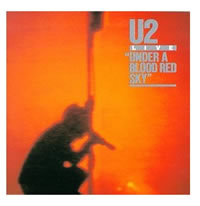 I know exactly where I was the night of June 5, 1983: I was freezing my butt off, soaked to the bone but ignoring my discomfort because I was in musical heaven, surrounded by huge sandstone rocks on both sides, a stormy sky above and a hungry young band called U2 just hitting its stride in front of me, its members playing their hearts out despite the crappy weather.
That concert was captured on an EP (for you post-CD fans, "extended play" releases were vinyl records with fewer songs than a full album but more than just a single with a flipside) and a video, both titled "Under a Blood Red Sky." The audio recording was actually a compilation of tracks recorded at Red Rocks and elsewhere during the same tour; the video was all filmed in Denver.
The combination of the two established U2 as world-class big-time rock stars, not the scrappy new-wavers who played clubs and small theaters. MTV loved the energetic performances amidst the dramatic, almost otherworldly, setting. Radio stations caught on to the band's talent, and U2 hit their stride. In the years since, the concert was hailed as a seminal moment not just for U2, but for pop music: Rolling Stone magazine named it to its list of the "50 Moments that Changed Rock and Roll."
I know exactly where I was the night of June 5, 1983: I was freezing my butt off, soaked to the bone but ignoring my discomfort because I was in musical heaven, surrounded by huge sandstone rocks on both sides, a stormy sky above and a hungry young band called U2 just hitting its stride in front of me, its members playing their hearts out despite the crappy weather.
That concert was captured on an EP (for you post-CD fans, "extended play" releases were vinyl records with fewer songs than a full album but more than just a single with a flipside) and a video, both titled "Under a Blood Red Sky." The audio recording was actually a compilation of tracks recorded at Red Rocks and elsewhere during the same tour; the video was all filmed in Denver.
The combination of the two established U2 as world-class big-time rock stars, not the scrappy new-wavers who played clubs and small theaters. MTV loved the energetic performances amidst the dramatic, almost otherworldly, setting. Radio stations caught on to the band's talent, and U2 hit their stride. In the years since, the concert was hailed as a seminal moment not just for U2, but for pop music: Rolling Stone magazine named it to its list of the "50 Moments that Changed Rock and Roll."