My beautiful mixed-race niece, Sage, who calls herself “hapa.” This photo was taken on Christmas Day 2014 during a family meal at … where else? … a Chinese restaurant.
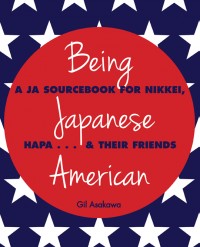
I’ve recently finished writing revisions for a new edition of my book, “Being Japanese American: A JA Sourcebook for Nikkei, Hapa … & Their Friends,” which will be published this June by Stone Bridge Press.
I mention this not just to pimp the book to you all (speaking of which, you can pre-order the book now), but because I wrote in the new foreword how I have decided not to use the word “hapa,” at least for now.
Instead, I wrote that I’ll use “mixed race” instead.
Hapa is a word originally used in Hawaii to describe mixed-race people, like half-Asian, half-Hawaiian. The term was used as a slur, but over the years it’s become commonly used even by mixed-race people. In fact, I’ve heard mixed-race people other than Asian combinations refer to themselves as hapa.
But in 2008, when I moderated a panel in Denver titled “The Bonds of Community: Hapa Identity in a Changing U.S.” for a conference sponsored by the Japanese American National Museum, a man stood up during the question-and-answer period and said he thinks it’s a racist term. At the time, I pushed back gently and noted that it’s already a pretty common term.
But the interchange with this man has stayed with me ever since.
Continue reading

 Johnson has been inspired by the work of hapa writer, filmmaker, artist, activist, standup comic and lifeguard (really)

 I wrote an article for Asian Avenue magazine, about